 ultimate-guide
What Should You Clean Before Moving Out of a Rental?
Last Updated: October 25, 2026
Quick Summary
A move out cleaning checklist for renters is your roadmap to passing the final walkthrough and recovering your full deposit. Landlords inspect inside appliances, behind furniture, baseboards, light fixtures, and window tracks, areas most renters miss. This guide covers the room-by-room process, wear versus damage, and when to hire a professional.
- A one-bedroom apartment takes 4 to 6 hours for thorough move-out cleaning; a two-bedroom takes 6 to 8 hours.
- Normal wear and tear includes minor carpet fading, small nail holes, and light scuffs; tenant-caused damage includes large wall holes, broken fixtures, and uncleaned stains.
- Most states require landlords to return deposits within 30 to 45 days and provide a written, itemized list of deductions.
- Prioritize the kitchen and bathrooms first, then work room by room to prevent missed spots.
- Photograph the cleaned unit with timestamps before the final walkthrough to protect yourself against disputed deductions.
Table of Contents
- Move Out Cleaning Checklist for Renters: The Complete Room-by-Room Guide
- Apartment Move-Out Cleaning Checklist for Getting Your Deposit Back
- Move-Out Cleaning Supplies You'll Need
- How Long Does Move-Out Cleaning Take?
- Prioritization, Timing, and Cleaning Sequence
- DIY vs. Hiring a Professional Move-Out Cleaner
- State and Local Security Deposit Rules
- Schedule Your Professional Move-Out Cleaning Today
- Frequently Asked Questions
Move Out Cleaning Checklist for Renters: The Complete Room-by-Room Guide
Your landlord will inspect the unit before returning your deposit, and what counts as "clean" often surprises renters.
Landlords check inside appliances, behind furniture, baseboards, light fixtures, and window tracks, areas most renters miss. This guide covers the room-by-room process, wear versus damage, and when to hire a professional.
Kitchen Cleaning Tasks
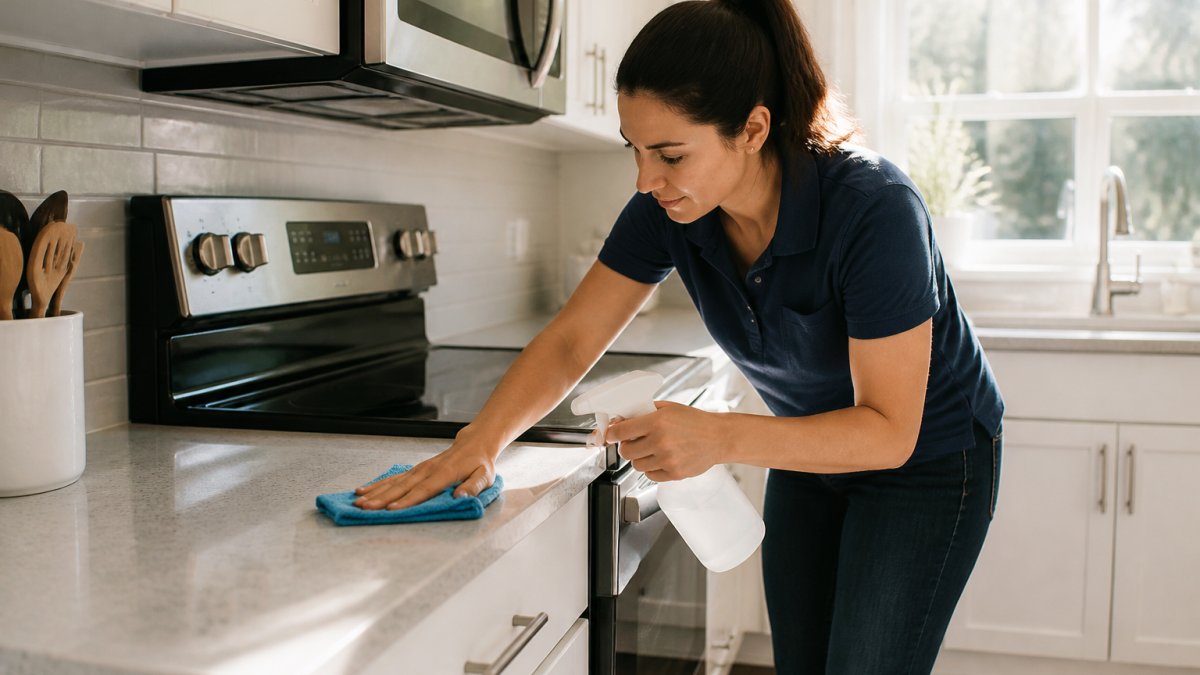
The kitchen receives the most scrutiny during move-out inspections. Landlords expect grease-free surfaces, clean appliances inside and out, and spotless countertops.
Start with the refrigerator.
For the oven, soak the racks in hot water while you wipe down all interior surfaces, including the cavity ceiling.
Wipe cabinet and drawer exteriors and interiors, clean handles, and wipe countertops, backsplash, and sink.
Bathroom Cleaning Tasks
Bathrooms demand meticulous attention because moisture and mold are landlord concerns. Scrub the toilet inside and out, including the base. Clean the tub or shower walls completely, focusing on grout lines and corners where mold hides.
Remove soap scum from glass shower doors and squeegee dry. Clean the exhaust fan cover and replace the filter if applicable.
Living Room and Bedroom Cleaning Tasks
Dust light fixtures, ceiling fans, and vents. Wipe door frames, knobs, and light switches. Patch nail holes or touch them up if your lease permits. Vacuum closets, including shelves and rods, and wipe down the inside of closet doors.
Light scuffs are normal wear, but clean or paint over obvious marks if your lease allows. Wipe accessible windowsills inside and out.
Flooring and Windows
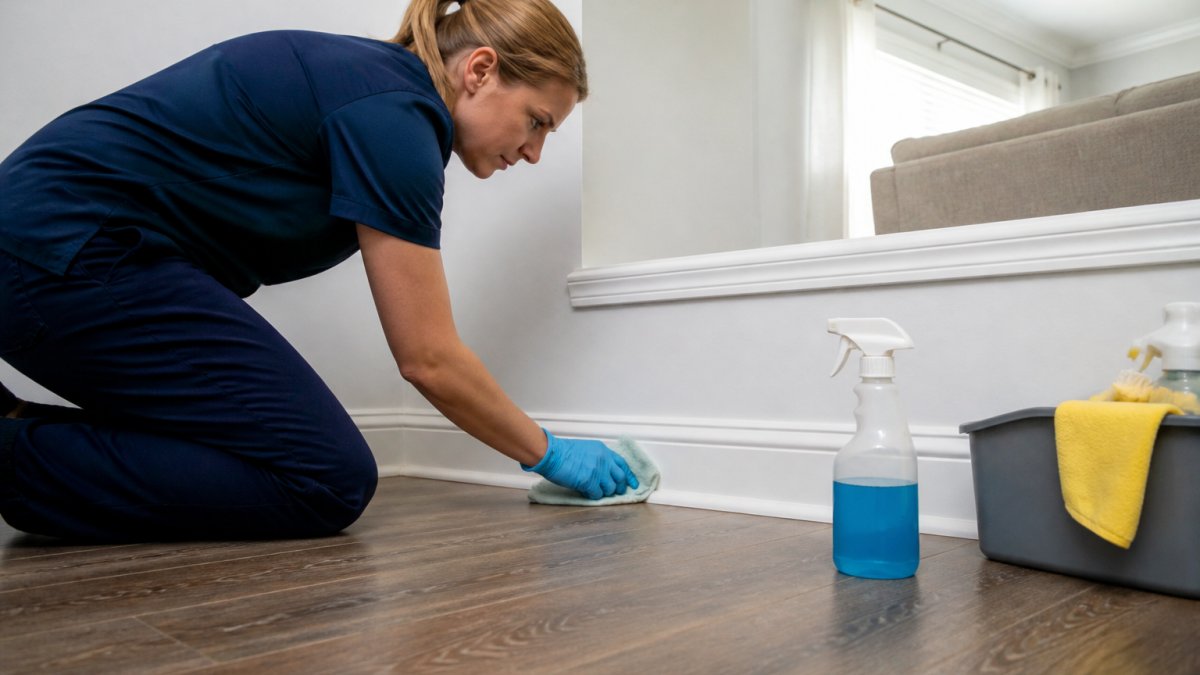
Vacuum all carpeted areas thoroughly, including corners and under furniture. Use a carpet cleaner if stains are visible. For hard floors, sweep and mop completely, paying attention to tile grout lines.
Clean all windows inside and out, including tracks, sills, and frames. Don't forget sliding glass doors and their tracks, which collect significant debris.
Apartment Move-Out Cleaning Checklist for Getting Your Deposit Back
Your move out cleaning checklist for getting your deposit back is about knowing what landlords actually inspect and what qualifies as damage versus normal wear.
Normal Wear and Tear vs. Tenant-Caused Damage
This distinction determines whether you're responsible for repair costs.
Tenant-caused damage includes large wall holes, broken fixtures, uncleaned stains, broken windows, damaged flooring, and mold from moisture issues.
Some states and localities have specific definitions, so consult your lease and local tenant laws. Many jurisdictions require a written itemization of deductions, giving you grounds to dispute unreasonable charges.
Documentation and the Final Walkthrough
Before moving out, photograph or video the entire unit as proof of its original condition. After cleaning, photograph again with timestamps if possible.
During the final walkthrough, ask what they're looking for and whether they see issues.
Request a timeline for your deposit return. Most states require it within 30 to 45 days, so know your local law and follow up if the deadline passes.
Move-Out Cleaning Supplies You'll Need
A basic toolkit covers most rental units:
- All-purpose cleaner for surfaces
- Glass cleaner for windows and mirrors
- Disinfectant spray for bathrooms
Avoid abrasive scrubbers, test cleaners on inconspicuous areas first, and check your lease for product restrictions.
How Long Does Move-Out Cleaning Take?
A typical one-bedroom apartment takes 4 to 6 hours for a thorough move-out clean; a two-bedroom takes 6 to 8 hours, assuming you work methodically through the checklist.
The timeline depends on the unit's condition and your speed. Most renters underestimate it because they overlook details like inside appliances and behind furniture.
Prioritization, Timing, and Cleaning Sequence
Start with the kitchen and bathrooms since they take the longest.
Work room by room, completing one space entirely before moving to the next to prevent missed spots.
Schedule cleaning for the day before your final walkthrough if possible, so you have time to address anything the landlord points out.
Prioritize high-touch areas, door knobs, light switches, faucets, and toilet seats, since they're visible and signal thoroughness.
DIY vs. Hiring a Professional Move-Out Cleaner
Neither option is universally cheaper. The right call depends on four variables: the deposit at stake, the unit's condition, your available hours, and how strictly your lease defines "clean." A decision framework beats a rule of thumb.
Start with the lease, not the price list
Before comparing costs, reread the cleaning and surrender clauses in your lease. Some require professional carpet cleaning or a receipt from a licensed cleaner; others say only that the unit must be returned in the same condition as move-in, ordinary wear and tear excepted. If the lease names a standard, that standard, not a generic checklist, sets the bar.
The real cost comparison
A DIY move-out clean costs supplies plus your time.
A professional move-out clean is priced by unit size, condition, and add-ons such as inside-oven, inside-fridge, carpet shampoo, and interior windows. Quotes vary widely by market, so collect two or three written estimates and confirm exactly what each includes, "move-out clean" is not a standardized scope.
A simple decision test
Use these questions in order:
- Is the deposit large relative to the quote? If the deposit is several times the quoted cleaning cost, hiring is usually the lower-risk choice, because a single missed area can cost more than the clean.
- Does the lease require professional cleaning or a receipt? If yes, DIY is not really an option unless you are willing to dispute the clause.
- How many hours can you realistically give? If packing, movers, and work leave you fewer hours than the time estimates above, DIY tends to produce a rushed clean and a second visit.
- Is the unit in rough condition? Heavy grease, soap scum, pet odor, or carpet stains push the job past typical DIY scope and toward professional equipment.
- Are there special surfaces? Stone counters, hardwood, and delicate finishes punish aggressive DIY products; a professional who carries the right chemistry is often cheaper than repairing a etched surface.
A hybrid that often wins
Many renters get the best result by splitting the job: handle the high-visibility, low-risk tasks yourself, dusting, wiping surfaces, vacuuming, cleaning closets and cabinets, and removing trash, and pay a professional only for the items that drive deductions, such as inside the oven and refrigerator, carpet cleaning, and window tracks. This keeps cost down while covering the areas landlords inspect most closely.
State and Local Security Deposit Rules
Security deposit law is where generic move-out checklists stop and where renters actually lose money. The rules are set by state statute and, in some places, by city or county ordinance, so the same cleaning job can produce very different outcomes depending on where the unit sits. Treat this section as a framework for reading your own jurisdiction, not as legal advice.
What state deposit statutes typically control
Most state statutes address four things renters should check before the final walkthrough:
- Deposit caps. Many states limit the deposit to one or two months' rent, and some set a lower cap for unfurnished units. If you were charged above the cap, that is a separate issue from cleaning, but it affects how much is at stake.
- Separate account and interest requirements. Some states require landlords to hold deposits in a separate escrow or trust account and, for longer tenancies, to pay interest. A few require written notice of the bank and account number.
- Itemized deduction statements. Nearly every state with a deposit statute requires the landlord to send a written, itemized list of deductions, often with receipts or invoices for repairs, rather than a lump-sum withholding.
Where local ordinances add requirements
Cities and counties sometimes layer on rules that state law does not. Common local additions include mandatory pre-move-out inspection notices, requirements that the landlord offer a walkthrough before the unit is re-rented, and tenant right-to-cure periods before deductions are finalized. Because these vary block by block, the reliable move is to search your state attorney general's tenant-landlord page and your city or county housing department site for "security deposit" and "move-out inspection" before you schedule cleaning.
The documentation that actually triggers the statute
Deposit statutes are procedural, and procedure is where renters win or lose. Before the walkthrough:
- Give written notice of your forwarding address. Many statutes condition the return deadline on receiving it, so an address given only verbally can stall your claim.
- Request the move-out inspection in writing if your jurisdiction or lease provides for one, and keep the request.
- Photograph and video the cleaned unit with timestamps, room by room, including inside appliances, closets, and window tracks, the areas most often cited in deduction letters.
- Ask for deductions in writing at the walkthrough and note who attended and when.
If the deadline passes or deductions look wrong
When a landlord misses the statutory return deadline or withholds without an itemized statement, many states allow the tenant to recover the deposit plus a statutory penalty, sometimes two or three times the withheld amount, and, in some cases, court costs and attorney fees. The mechanism is usually a demand letter followed by a small-claims filing, and the filing limits and procedures are set by your state. your state attorney general's tenant rights information and state and local tenant law resources are the starting points for the exact statute, deadline, and penalty in your area. Document everything from the day you give notice, because the paper trail, not the cleaning itself, is what supports a claim.
Schedule Your Professional Move-Out Cleaning Today
Recovering your security deposit starts with a thorough move-out cleaning checklist. Whether you handle it yourself or hire professionals, the details matter.
A Room-by-Room Guide to Omaha Move-In and Move-Out Cleaning provides additional detailed guidance for each space. For pricing and to schedule your professional move-out clean, contact our team for a customized quote.
| Cleaning Area | Time Required | Frequency |
|---|---|---|
| Kitchen (appliances, counters, cabinets) | 90-120 minutes | Once during move-out |
| Bathroom (toilet, tub, fixtures, grout) | 60-90 minutes | Once during move-out |
| Bedrooms and living areas (dusting, vacuuming) | 60-90 minutes | Once during move-out |
| Floors (vacuuming, mopping, baseboards) | 60-90 minutes | Once during move-out |
| Windows, tracks, and doors | 45-60 minutes | Once during move-out |
| Final touch-ups and detail work | 30-45 minutes | Once during move-out |
Your move-out inspection determines whether you recover your full deposit or face unexpected deductions. The move out cleaning checklist for renters covered here addresses every area landlords inspect.
Frequently Asked Questions
What should I include in a move out cleaning checklist?
A comprehensive move out cleaning checklist covers all rooms systematically: kitchen (oven, refrigerator, cabinets, countertops), bathroom (toilet, shower, sink, mirrors), bedrooms and living areas (walls, baseboards, closets, shelves), flooring (vacuuming, mopping, sweeping), windows and window tracks, light fixtures, ceiling fans, door frames, and door knobs. Document completion with photos for your records. Most renters miss inside appliances, baseboards, and light fixtures, areas landlords specifically inspect during move-out walkthroughs.
What cleaning supplies do I need when moving out?
Essential move-out cleaning supplies include all-purpose cleaner, glass cleaner, bathroom scrub (for tile and grout), degreaser (for kitchen appliances), vacuum or broom and dustpan, microfiber cloths or sponges, mop and bucket, trash bags, and safety gloves. For stubborn stains or oven buildup, add oven cleaner and a scrub brush. Specialized supplies like grout cleaner or wood polish may be needed depending on your unit's finishes. Start with a basic kit and add supplies as you encounter specific cleaning challenges.
How long does move-out cleaning take?
A thorough move-out cleaning typically takes 4-8 hours for a one-bedroom apartment and 6-12 hours for a two- or three-bedroom unit, depending on the unit's condition and your cleaning experience. Deep cleaning of appliances, windows, and baseboards adds significant time. Many renters underestimate the effort required for detailed tasks like scrubbing the oven interior or cleaning window tracks. Hiring professional cleaners usually reduces time to 2-4 hours per unit, allowing you to focus on packing and final logistics.
What is normal wear and tear versus tenant-caused damage?
Normal wear and tear includes minor carpet fading, small nail holes from pictures, slight discoloration on walls, and worn door handles or light switches. Landlords cannot charge for these. Tenant-caused damage includes large holes in walls, broken windows, damaged flooring, broken fixtures, stains from spills, or broken appliances. Many security deposit disputes arise from disagreement over this distinction. Document your unit's condition with photos at move-in and move-out, and request a written explanation if your landlord deducts charges, some states require itemized lists within 30 days of move-out.
Can a landlord charge for cleaning after a tenant moves out?
Landlord cleaning charges vary by state law. Some states allow landlords to deduct reasonable cleaning costs from security deposits if the unit is not left in "normal" condition, while others prohibit this practice. Federal law does not address cleaning charges directly; instead, state and local laws govern security deposit deductions. Review your lease and your state's tenant rights laws before moving out. If your landlord deducts cleaning costs, request an itemized receipt showing what was cleaned and the cost. Dispute any charges you believe are unreasonable within your state's appeal timeline.
What should I clean first when moving out?
Start with the largest appliances and highest-impact areas: oven, refrigerator, and freezer first, as these require the most time and degreaser. Move to bathrooms next to allow cleaning products time to work on stubborn stains. Then tackle bedrooms and living areas, working from top to bottom (ceiling fans and light fixtures, then walls and baseboards, then floors). Save flooring for last so you don't re-dirty cleaned areas. This sequence prevents you from cleaning an area twice and ensures you finish with the most visible spaces, floors and windows, in pristine condition.
How clean does an apartment need to be when you move out?
Your rental must be returned in "broom clean" or "move-in ready" condition, depending on your lease and state law. This means all trash removed, floors vacuumed and mopped, surfaces wiped down, appliances cleaned inside and out, bathrooms scrubbed, windows and window tracks cleaned, baseboards wiped, light fixtures cleaned, and no marks or damage on walls beyond normal wear and tear. The standard is typically that the unit should be as clean as when you moved in, minus normal wear. Landlords often conduct a final walkthrough inspection; meeting or exceeding this standard protects your security deposit.
What do tenants have to clean when moving out?
Most leases require tenants to clean the entire rental unit, including all rooms, closets, appliances, fixtures, and flooring. Specific obligations often include removing all personal items and trash, cleaning inside the oven and refrigerator, wiping baseboards and door frames, cleaning windows and window tracks, vacuuming or sweeping all flooring, and mopping hard floors. Some leases specify professional carpet cleaning or window washing at tenant expense. Review your lease carefully for specific cleaning requirements. If your lease is silent on cleaning, state law typically requires the unit be left in rentable condition, which means clean and free of damage.