 how-to
How to Schedule Office Cleaning for Your Business
Last Updated: October 28, 2026
Quick Summary
To schedule office cleaning well, base the frequency on daily foot traffic: weekly for under 20 people a day, two to three visits a week for 20 to 75, and daily for more than 75. Choose cleaning hours that suit your staff, then build a checklist of daily, weekly and monthly tasks. Share the written schedule with your provider so visits run on time.
- Entryways, restrooms and break rooms need the most frequent attention.
- Daytime touch-ups handle spills and restrooms quickly during business hours.
- Daily tasks include emptying trash, cleaning restrooms and wiping high-touch surfaces.
- Monthly tasks cover inside appliances, vents, light fixtures and carpet shampooing.
- Post the schedule where staff can see it and review it every quarter.
Table of Contents
- How Often Should an Office Be Cleaned?
- Choosing the Right Cleaning Hours: During or After Business Hours
- Building an Office Cleaning Checklist: Daily, Weekly and Monthly Tasks
- Creating an Office Cleaning Schedule Template for a Small Office
- Communicating Your Schedule to Your Cleaning Provider
- Frequently Asked Questions
Knowing how to schedule office cleaning well saves time, keeps staff healthy and stops small messes from turning into big ones. A business may book cleaning when someone remembers, and the office can end up dusty by Tuesday and overwhelmed by Friday. A clear schedule fixes that. Below, we walk through how often to clean, when to clean, what to include on a checklist, and how to hand the plan to your cleaning provider.
How Often Should an Office Be Cleaned?
Frequency depends mostly on how many people use the space each day.
Setting Frequency by Traffic and Foot Traffic Level
Start by asking how many people walk through your doors daily. That number tells you how fast dirt builds up.
- Low traffic (under 20 people a day): Weekly cleaning is usually enough.
- Medium traffic (20 to 75 people a day): Plan for two to three visits per week.
- High traffic (more than 75 people a day): Daily cleaning keeps up with the load.
Entryways, restrooms and break rooms get the most wear. Give them extra attention, even if the rest of the office is cleaned less often.
Choosing the Right Cleaning Hours: During or After Business Hours
Staff come in to a clean space, and cleaners can move freely without getting in the way.
Daytime cleaning has its own benefits:
- Quick touch-ups of restrooms and high-touch surfaces during the day
- Faster response to spills or messes
- Useful for offices that run late or work around the clock
A business can split the work. A crew handles the deep tasks, and a short visit covers restrooms and trash. Watch out: cleaning during peak hours can disrupt meetings and create safety concerns with wet floors, so plan those visits carefully.
Building an Office Cleaning Checklist: Daily, Weekly and Monthly Tasks
A checklist turns a vague request like "clean the office" into clear, repeatable work. Sort tasks by how often they need to happen.
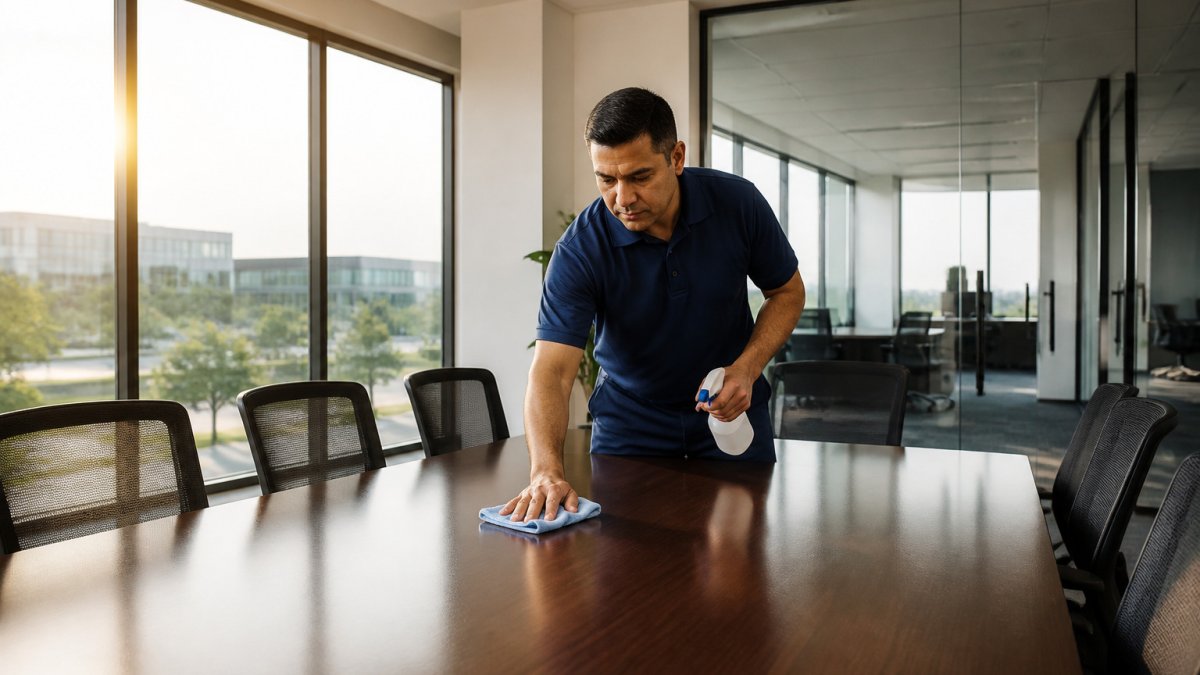
Daily tasks:
- Empty trash and recycling bins
- Clean restrooms, including sinks, toilets and dispensers
- Wipe down high-touch surfaces like door handles and light switches
- Vacuum or sweep high-traffic areas
Weekly tasks:
- Dust desks, shelves and electronics
- Clean break room appliances, inside and out
- Mop hard floors throughout the office
- Wipe glass doors and partitions
Monthly tasks:
- Clean inside microwaves, refrigerators and cabinets
- Dust vents, ceiling fans and light fixtures
- Shampoo carpets in heavy-use areas
- Check supplies and restock paper towels, soap and tissues
Adjust the list for your office. A law firm with mostly paper files needs different priorities than a tech startup full of equipment.
Creating an Office Cleaning Schedule Template for a Small Office
A small office (around 2,000 square feet) can use a simple weekly grid. Write each task, the day it happens and who is responsible.
| Task | Mon | Tue | Wed | Thu | Fri |
|---|---|---|---|---|---|
| Empty trash | Yes | Yes | Yes | Yes | Yes |
| Clean restrooms | Yes | Yes | Yes | Yes | Yes |
| Dust surfaces | Yes | ||||
| Mop floors | Yes | ||||
| Clean break room | Yes | Yes |
Post the schedule where staff can see it, and review it every quarter. Offices change, and the plan should change with them.
Communicating Your Schedule to Your Cleaning Provider
A schedule only works if your cleaning provider knows it. Share it in writing and cover these points:
- Days and hours: Name the exact days and time windows you want.
- Access: Explain how cleaners get in, including keys, codes or badges.
- Priority areas: Point out spaces that need extra attention, such as a reception desk or kitchen.
- Supplies: State who provides cleaning products and paper goods.
- Problems: Set a clear way to report missed visits or quality concerns.
When you talk to a provider, ask about their scheduling process, how they handle missed visits and how they track quality. Ask for a written quote based on your actual needs. You can review current service options and request an estimate on the LSC Omaha Cleaning website.
Frequently Asked Questions
How do I create a cleaning schedule for my office?
Start by listing every area that needs cleaning, such as restrooms, kitchens, reception, and workstations. Then sort those tasks by how often they need attention: daily, weekly, or monthly. Assign each task a day or time window, and decide whether the work happens during or after business hours. Share the draft with your cleaning provider or staff, adjust based on feedback, and review the schedule every quarter to confirm it still fits how the office is used.
How often should an office be cleaned?
The right frequency depends on how many people use the space each day.
What should be included in a daily office cleaning checklist?
Each task should have a clear owner. Keep the checklist visible so the team can confirm completion at the end of each shift.
Should office cleaning happen during or after business hours?
Cleaning after business hours avoids disrupting staff and clients and lets crews work without interruptions. Daytime cleaning allows quick response to spills or restroom issues.